
UAE Launches Four New Visit Visa Categories
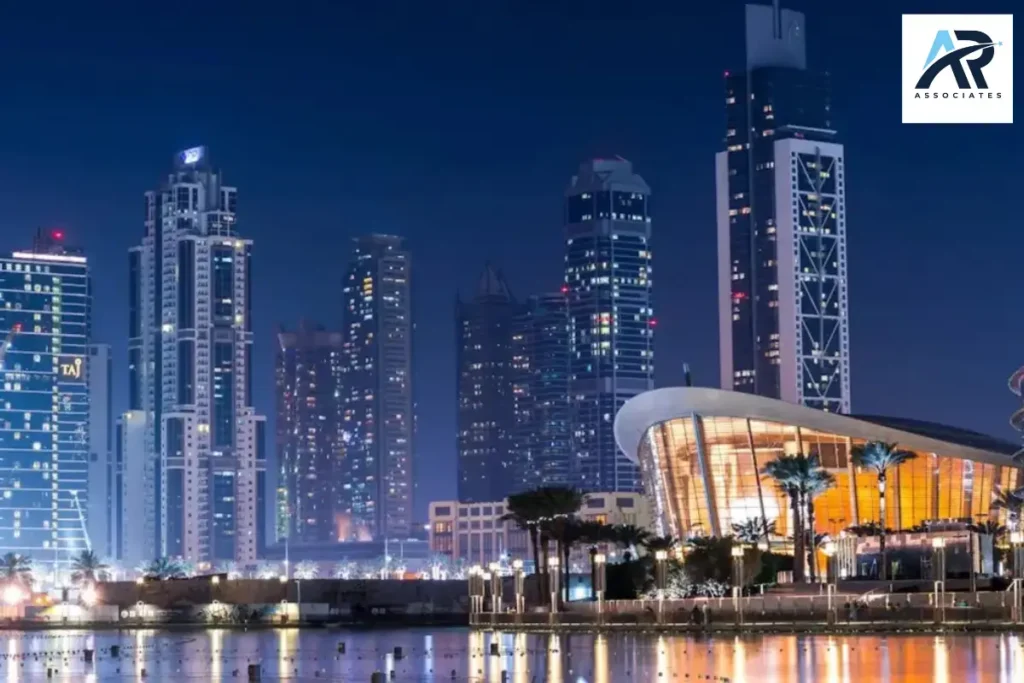
The UAE has introduced four new visit visa categories to attract global talent, entrepreneurs, and visitors across different sectors. The update reflects the country’s goal to enhance tourism, innovation, and business opportunities while simplifying travel for professionals and tourists. 1. Entry Visa for AI Specialists The first new category targets professionals working in artificial intelligence. Applicants can apply for single or multiple entries with a sponsor’s letter from a recognized tech or research institution. This step supports the UAE’s focus on building a knowledge-based economy and encouraging innovation-driven talent to explore opportunities in the country. 2. Entertainment Visa The entertainment visa allows foreign artists, performers, and production crews to enter the UAE for short-term entertainment projects or events. This category aims to strengthen the country’s creative industry and support its growing entertainment and cultural sectors. Applicants must have proper documentation and sponsorship from an approved host entity. 3. Event Visa The event visa makes it easier for visitors to attend festivals, exhibitions, seminars, conferences, or sports events. Applicants must have an official sponsor, such as an organizing company or event host, along with valid supporting documents. This change aligns with the UAE’s position as a global destination for business and cultural gatherings. 4. Multiple-Entry Visa for Cruise and Pleasure Tourists The fourth category caters to tourists arriving via cruise ships or private boats. These visas are issued for multiple entries, allowing tourists to explore different emirates during their stay. A licensed tourism operator must act as a guarantor, and a detailed travel itinerary is required. This aims to boost maritime tourism and attract high-value visitors. Additional Reforms The UAE has also updated visa rules for visiting relatives and friends. Income thresholds now determine eligibility. A host earning at least AED 4,000 per month can sponsor a first-degree relative, while AED 8,000 is required for second- or third-degree relatives. Sponsoring friends requires a minimum income of AED 15,000. Other updates cover business exploration visas, humanitarian case permits, and residency rights for widowed or divorced foreign spouses of UAE citizens. For instance, humanitarian case visas can now last up to one year, and the Director General may extend or cancel them depending on the applicant’s situation. Truck drivers, another newly added category, may apply for single or multiple-entry permits through licensed shipping or transport companies. Applicants must show financial solvency, pay prescribed fees, and maintain valid health insurance. These new visa categories make the UAE more accessible for global professionals and visitors. They also show the nation’s intent to build a future-ready economy while offering better flexibility for those looking to live, work, or travel. Whether for business, entertainment, or exploration, the updated Visit Visa Dubai rules create broader opportunities for both individuals and companies. Why These Updates Matter By diversifying visa options, the UAE positions itself as a regional leader in tourism and innovation. These reforms help attract specialists in emerging industries while supporting economic growth through travel and events. For visitors, the Visit Visa Dubai system now offers tailored options that fit different purposes—making travel more seamless and predictable. Looking to apply for one of these new UAE visit visas?Contact AR Associates Visa Services today for expert assistance with documentation, application processing, and eligibility guidance. Simplify your visa journey with professionals who know every detail of the process.
Dubai Launches Founders HQ to Power Next Wave of UAE Startups
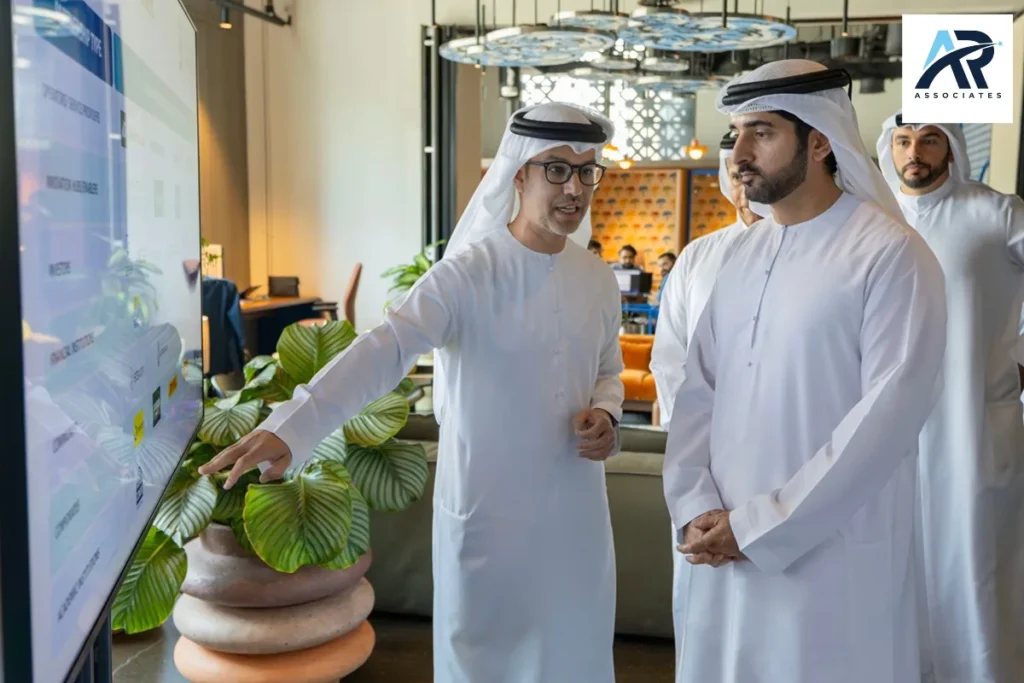
Dubai has unveiled Founders HQ, a new initiative designed to accelerate the growth of startups and SMEs. The platform combines a physical campus with digital tools to support founders, investors, and partners. The initiative is part of the Dubai Economic Agenda D33, which aims to scale 30 unicorns and help 400 SMEs grow by 2033. By bringing together public and private sector players, Founders HQ creates an ecosystem where innovation and collaboration thrive. A Hub for Entrepreneurs Located at the 25Hours Hotel in One Central, Founders HQ offers co-working spaces, meeting rooms, and event facilities. Workshops, networking events, and mentorship programmes are designed to help startups overcome growth challenges. The campus also celebrates creativity, featuring local artists and showcasing Dubai’s innovative culture. This blend of work, learning, and inspiration provides a unique environment for entrepreneurs. Comprehensive Support for Startups Founders HQ offers end-to-end services for emerging businesses. These include acceleration programmes, investor access, tailored advisory, and business setup support. For those considering company formation in Dubai, Founders HQ simplifies the process. Startups can access licensing support, regulatory guidance, and mentorship from experienced professionals. The integrated digital platform ensures founders can manage operations efficiently and connect with key ecosystem players globally. Strategic Partnerships and Global Outreach Dubai Founders HQ has partnered with global organisations such as Endeavor and Plug and Play to provide specialised growth programmes. These partnerships offer startups access to international markets, investors, and technology expertise. By uniting stakeholders across finance, telecom, and innovation sectors, Founders HQ strengthens Dubai’s position as a global hub for entrepreneurship. It also aligns with the UAE’s vision to attract international talent and foster digital innovation. Driving the Future of Entrepreneurship in Dubai H.H. Sheikh Hamdan bin Mohammed bin Rashid Al Maktoum emphasized that entrepreneurship is a key driver of sustainable growth. Supporting startups is seen as an investment in human potential and Dubai’s economic future. Omar Sultan Al Olama, Minister of State for Artificial Intelligence, highlighted that Founders HQ accelerates innovation and helps startups scale beyond borders. By providing integrated services, the platform enables businesses to grow efficiently while reducing barriers to market entry. Benefits for Startups and SMEs Founders HQ offers several advantages: These features ensure startups have the resources to move quickly from idea to market-ready business. Conclusion Dubai Founders HQ marks a significant step in building a robust startup ecosystem. By providing mentorship, funding access, and market entry support, it empowers entrepreneurs to scale successfully. For startups seeking guidance or support in establishing and growing their business, AR Associates can provide expert assistance for company setup, licensing, and advisory services in Dubai.
UAE Startups: Emirates Development Bank Unveils $136M Boost for Entrepreneurs
The UAE is taking a major step to support innovation. Emirates Development Bank (EDB) has announced a $136 million boost for startups and entrepreneurs across all seven emirates. This initiative aims to strengthen the UAE’s position as a global hub for business innovation. What the Boost Offers The new funding is part of the EDB 360 program. Entrepreneurs can access capital without needing collateral. Business accounts can be opened in minutes, reducing delays that often slow startups. In addition to financial support, the program connects founders with mentors, accelerators, and investors. This combination of money and guidance helps new ventures not only start but scale successfully. Focus on Startups in UAE Startups in UAE now have a faster and more inclusive path to growth. The initiative covers all seven emirates, including Abu Dhabi, Dubai, Sharjah, and Ras Al Khaimah. This approach ensures that innovation is not limited to one city. Founders from smaller emirates now have access to the same funding, mentorship, and networks as those in larger business centers. Simplifying Business Operations One key feature of the EDB program is its focus on speed and efficiency. Entrepreneurs no longer face heavy bureaucracy when opening accounts or applying for funding. The program also promotes collaboration. Startups can network with peers, investors, and experts to gain insights and solve problems faster. Mentorship programs provide practical guidance, helping businesses avoid common pitfalls. Encouraging Growth and Innovation The UAE government has emphasized that supporting startups is critical for economic diversification. By funding early-stage companies, the country fosters innovation in technology, finance, healthcare, and other high-potential sectors. EDB 360 is designed to encourage risk-taking. Founders can experiment, test ideas, and scale without excessive financial pressure. Access to capital and advice reduces the likelihood of failure for promising ventures. National Impact The $136 million boost is expected to create new jobs, increase competitiveness, and strengthen the UAE’s economy. Local talent gains more opportunities, and investors gain a larger pool of innovative businesses. By supporting startups, the UAE aims to build an ecosystem where ideas can grow quickly and attract international attention. This also helps the country compete globally for talent and investment. How Entrepreneurs Can Benefit Founders looking to join the program can apply online through the EDB 360 platform. The application process is designed to be simple and fast. Once approved, startups in UAE gain access to funding, mentorship, and networking opportunities. The combination of financial and practical support creates a strong foundation for sustainable business growth. Conclusion The Emirates Development Bank’s $136 million initiative is more than funding. It represents a commitment to building a vibrant startup ecosystem across the UAE. For startups in UAE, this program provides the resources, guidance, and connections needed to succeed. By opening doors to all seven emirates, the initiative makes the UAE a truly inclusive innovation hub. For expert guidance on accessing startup funding, mentorship, and support in the UAE, contact AR Associates today.
Dubai Airport Traffic to Hit 124 Million Passengers by 2032, Says CEO Paul Griffiths
Dubai Airports is preparing for record growth. CEO Paul Griffiths projects passenger numbers will reach 124 million by 2032. This growth reflects Dubai’s position as a leading global aviation hub. Current Traffic and Near-Term Growth Dubai International Airport (DXB) is on track to handle 95.3 million passengers by the end of 2025. This marks a new record and reinforces its status as the world’s busiest international airport. Griffiths predicts that the airport will surpass 100 million passengers by 2027. By 2031, traffic is expected to approach 115 million. To manage this growth, operations will gradually move to Al Maktoum International Airport (DWC). Al Maktoum Airport Expansion Al Maktoum International Airport has been operational since 2010, primarily for cargo, executive flights, and charter services. The upcoming expansion will accommodate 124 million passengers. Construction and design are ongoing, with aviation engineering partners collaborating closely to create a world-class facility. This expansion ensures Dubai remains competitive in global aviation for decades to come. Impact on Aviation and Travel Increasing passenger numbers will create new opportunities for airlines, travel operators, and logistics companies. Dubai’s connectivity supports business, tourism, and trade in the region. The airport’s growth also has implications for visitors needing visas in Dubai. With more international flights, processing and regulations may adapt to handle higher volumes efficiently. Dubai Airshow 2025 Highlights The Dubai Airshow 2025 is expected to be the largest edition yet. It will showcase innovations in aviation, aerospace, and defence. Key highlights include vertical take-off and landing electric aircraft, space technology, and advanced defence systems. These developments demonstrate Dubai’s commitment to modernizing its aviation sector. Economic and Business Opportunities The rise in air traffic will benefit local businesses and investors. Hotels, restaurants, transport services, and retail sectors can expect increased demand. Companies and individuals planning travel or business operations should consider visas in Dubai well in advance. The anticipated passenger surge may lead to stricter processing timelines and higher demand for visa services. Why This Growth Matters Dubai’s airports are a major economic engine. Passenger growth supports tourism, trade, and international investment. Al Maktoum International Airport’s expansion ensures the city can meet rising demand while maintaining safety and efficiency. Investors can explore opportunities in airport services, aviation support, and hospitality. Airlines can expand routes, and travel agencies can tailor packages for the growing number of visitors. Conclusion Dubai’s airport traffic is on a steady rise, with projections reaching 124 million passengers by 2032. Expansion at Al Maktoum International Airport will support this growth, benefiting airlines, businesses, and visitors alike. For travelers and businesses, staying informed about visas in Dubai and airport regulations is crucial. Planning ahead will ensure smooth travel and business operations as the city continues to welcome millions more passengers in the coming decade. For assistance with Dubai visas, travel planning, or business setup, contact AR Associates today.
Dubai Launches New Permit Giving 10,000 Free Zone Firms Access to Mainland Markets
Dubai has introduced the Free Zone Mainland Operating Permit, a new initiative that allows free zone companies to operate in the mainland. This structured permit provides firms with access to domestic trading and government contracts previously limited to mainland entities. What the Permit Means for Businesses The permit bridges the gap between free zones and the mainland. Companies can now expand their operations without establishing a separate mainland entity. Businesses in sectors like technology, consultancy, design, professional services, and trading are eligible in the initial phase. Plans exist to extend the permit to regulated sectors later. Dubai’s Department of Economy and Tourism (DET) stated that this move will reduce costs, lower operational risks, and encourage growth for small and large companies alike. Existing staff can be used for mainland operations, eliminating the need for new recruitment. Permit Details and Costs The Free Zone Mainland Operating Permit is valid for six months and costs AED 5,000. It is renewable for the same fee. Companies using the permit will be subject to a 9% corporate tax on revenue related to mainland activities. Separate financial records must be maintained to comply with the Federal Tax Authority (FTA). By ensuring compliance, the permit promotes transparency and regulatory alignment between free zones and mainland operations. Impact on Free Zone Firms DET estimates that over 10,000 active free zone firms will benefit from the new permit. The initiative could boost cross-jurisdictional activity in Dubai by 15-20% within the first year. Companies can now integrate with domestic supply chains, expand local trading, and compete for government tenders worth billions. This opens significant growth opportunities that were previously exclusive to mainland-licensed businesses. Boosting Dubai’s Business Environment Ahmad Khalifa AlQaizi AlFalasi, CEO of Dubai Business Registration and Licensing Corporation (DBLC), emphasized that the permit enhances ease of doing business. He noted it will create jobs, support entrepreneurship, and attract global investors. The initiative reinforces Dubai’s position as a benchmark for regulatory innovation. By allowing free zone firms access to mainland markets, Dubai strengthens its competitive edge while encouraging economic diversification. How to Apply Eligible companies must hold a Dubai Unified Licence (DUL). Applications can be submitted digitally through the Invest in Dubai (IID) platform. The process is fully online, making it simple for SMEs, startups, and incorporation agents to gain mainland access quickly. This digital system streamlines approvals and ensures efficiency, reducing paperwork and wait times for businesses seeking expansion. Why It Matters for Entrepreneurs For entrepreneurs and investors, this permit provides a cost-effective path to scale operations. Free zone companies no longer need a separate mainland setup to access local markets. For firms considering company formation Dubai, this new permit offers flexibility and rapid market entry. It also allows businesses to maintain existing structures while tapping into mainland opportunities. Conclusion The Free Zone Mainland Operating Permit is a major step in Dubai’s business strategy. It provides over 10,000 firms access to mainland trading, government contracts, and new growth channels. This initiative simplifies cross-jurisdiction operations and strengthens Dubai’s position as a global business hub. For businesses planning company formation Dubai, it creates a faster, more efficient route to expand operations and compete in local markets. For expert assistance with free zone permits, mainland access, and company setup in Dubai, contact AR Associates today.
Time to Buy Gold? Next Dip Could Be Investors’ Best Entry Point, Say Analysts

Gold prices have been on a rollercoaster this year. After reaching record highs near $4,400 per ounce, the yellow metal recently fell below $4,000. Analysts suggest this dip could be a prime opportunity for investors. Recent Gold Market Trends Gold surged more than 50% year-to-date in 2025. However, the recent drop of 3.5% last week caused concern among traders. Day traders bought some of the dip, but long-term gains need sustained interest. Central banks, especially outside the U.S., continue diversifying their reserves into gold. Their buying supports demand and stabilizes prices. Why Gold Is Falling Several factors contributed to the dip: Even with these pressures, analysts see potential. Lower yields on bonds and economic uncertainty tend to push investors toward gold as a safe haven. Dip Buying Strategy Buying during a dip can be profitable, but timing is crucial. Investors should monitor price trends and market conditions. Long-term holders benefit from steady accumulation through ETFs, gold coins, or bars. Short-term traders may react to daily fluctuations, but long-term demand depends on broader economic trends. The recent dip shows that buying the yellow metal when prices fall can be effective. Bank of America updated its forecast, suggesting strategic buying could pay off if economic uncertainty continues. Economic Factors Supporting Gold Several conditions favor gold in 2025 and beyond: Investors often move to gold during turbulent periods. Its value tends to hold better than cash or bonds during uncertainty. Tips for Investors For those considering entering the market, analysts advise: Using technology like apps and alerts can help investors act quickly during dips. Gold as a Long-Term Asset Gold remains a strong hedge against inflation and currency fluctuations. Over the past five years, annual returns have ranged from 1.4% to 52.9%. Even during dips, long-term buyers have historically benefited from price recovery. Analysts stress that the current market dip may present one of the best times to buy gold in 2025. Conclusion Gold’s recent decline under $4,000 creates an opportunity for both new and seasoned investors. Economic uncertainty, inflation, and global supply issues make the yellow metal a safe option. Investors should monitor market conditions carefully and consider strategic buying during dips. With thoughtful planning, the current market may offer a valuable entry point for those looking to diversify or strengthen their portfolios. For expert guidance on gold investments and market insights, contact AR Associates today.
UAE: Indian Expats Rethink Remittances as Rupee Hits Record Low Against Dirham

Indian expatriates in the UAE are rethinking how they send money home. The rupee recently hit an all-time low against the dirham, making transfers less valuable. Many expats are adopting a cautious approach to remittances. Rupee Hits Record Low On September 5, the Indian rupee fell to 24.0762 against the UAE dirham. This surpassed its previous low of 24.0681. The continuous decline has raised concerns among expatriates. Why Expats Are Waiting Many Indian workers in the UAE are adopting a “wait and watch” strategy. They anticipate that the rupee might drop further before sending money. Mohammed Iqbal, another Dubai resident, explained his plan: “With uncertainty around tariffs and US policies, the rupee may slide further. I’m holding my money for now.” The Reserve Bank of India has attempted to stabilize the currency by intervening in the market. Still, traders remain cautious, keeping volatility high. Alternative Strategies Some expats are transferring money strategically. Suresh M., based in the UAE, sent money in early September when the rupee dipped. He focused on his family’s immediate needs, like festival shopping. Others, like Melissa Edward in Abu Dhabi, wait for favorable exchange rates. She keeps funds in her bank account to earn interest and invests in Indian stocks. When rates drop, she transfers money quickly using online apps, which often provide the best conversion rates. Using digital apps is increasingly popular. Expats avoid traditional exchange houses due to higher fees and slower service. Apps allow instant transfers and better control over timing. Impact of Currency Fluctuations The declining rupee affects more than just transfers. Expats are concerned about inflation in India. Rising prices mean remittances may not stretch as far as before. Some are exploring UAE investments instead of sending funds back home. Historical cases show that investing locally could have offered better returns than property or stock investments in India. Planning Remittances Carefully Financial advisors suggest monitoring the dirham to rupee exchange UAE rates before sending money. Small fluctuations can affect large transfers significantly. Diversifying investments between local currencies, dollars, and Indian accounts can also protect against losses. Expats should plan transfers around personal needs, festivals, or emergencies rather than fixed monthly schedules. Future Outlook Economists believe the rupee may continue to experience volatility due to global factors. For UAE-based Indian expats, understanding the market and timing transfers wisely is key. Some experts also advise using technology to track rates. Online notifications can help send money when conversion is more favorable, maximizing the value of remittances. Conclusion Indian expatriates are adapting to a weaker rupee by delaying remittances, using digital platforms, and exploring UAE investments. Watching the dirham to rupee exchange UAE carefully helps ensure transfers retain value. Planning, strategy, and smart timing have become essential in protecting hard-earned earnings. For guidance on smart financial planning and remittance strategies in the UAE, contact AR Associates today.
UAE-China Vehicle Trade: Firms Sign Agreement to Set Up Auto Business Parks

Vehicle trade between the UAE and China is about to get a major boost. Firms from both countries have signed an agreement to set up specialized auto business parks. This initiative aims to make vehicle imports and exports more efficient while supporting sustainable business practices. Why This Partnership Matters China is the world’s largest automotive market, exporting millions of new and used vehicles every year. The UAE, especially Abu Dhabi, serves as a growing logistics and trade hub. By combining their infrastructure and expertise, the two countries can streamline operations and cut delivery times. The partnership also focuses on creating green automotive parks. These hubs will not only store vehicles but also adopt energy-efficient practices. Companies in the UAE and China hope this will reduce emissions and operating costs. How the Auto Business Parks Will Work Under the agreement, Abu Dhabi Ports Group and China’s SPG Yantai Port will build and operate terminals designed for vehicle handling. The hubs will link Yantai’s Asia-Pacific Green Automotive Circular Economy Industrial Park with Abu Dhabi’s automotive terminals. This network aims to simplify vehicle shipments, improve storage, and create a smooth supply chain for both new and second-hand vehicles. AI-driven technologies will manage operations, track shipments, and optimize logistics. The Role of a China-Middle East-Africa Corridor The firms are also exploring a broader automotive corridor connecting China, the Middle East, and Africa. If successful, this corridor could make the UAE a central hub for regional vehicle trade. A dedicated route will allow faster and cheaper movement of vehicles. Exporters from China can reach Africa and the Middle East with fewer delays. For UAE businesses, it opens opportunities to sell vehicles across multiple regions efficiently. Economic and Environmental Impact The initiative is designed to benefit both economies. For Abu Dhabi, it supports trade diversification and strengthens its position as a regional logistics hub. China benefits by expanding its vehicle export market while promoting sustainable practices. Green automotive parks will use sustainable energy and promote a circular economy. This approach focuses on reducing waste, recycling vehicle parts, and lowering carbon emissions. It aligns with global trends toward eco-friendly trade. Opportunities for Businesses Businesses in both countries will gain easier access to vehicles, parts, and services. UAE importers can expect smoother customs processes, quicker deliveries, and better storage options. Meanwhile, Chinese manufacturers can reduce logistical hurdles and reach new markets faster. Small and medium enterprises in the auto sector may also benefit. The hubs will create jobs and support service providers like shipping companies, repair shops, and logistics firms. What This Means for UAE-China Vehicle Trade This agreement marks a significant step in modernizing UAE-China vehicle trade. It combines technology, sustainability, and infrastructure to improve supply chains. Investors and businesses looking to enter the automotive market can expect reduced costs, improved efficiency, and expanded opportunities across the region. The UAE-China partnership also sets an example for other trade sectors. By focusing on green and connected industrial parks, both countries show how trade growth can go hand in hand with environmental responsibility. Conclusion The new auto business parks promise faster, greener, and more reliable vehicle trade between the UAE and China. With advanced technology, a dedicated corridor, and sustainable practices, both countries are paving the way for a stronger automotive market. Businesses interested in tapping into this opportunity can consult trade experts and logistics partners to navigate the new system effectively. For expert guidance on business setup and trade operations in the UAE, contact AR Associates today.
Etihad Airways Hits Record 300 Daily Flights as Global Expansion Accelerates

Etihad Airways has reached a major milestone—300 scheduled passenger flights per day, the highest in its history. The airline’s rapid growth highlights a strong recovery in air travel and rising global demand, marking a record year for the UAE aviation industry. Record Growth and Global Reach Operating 300 daily flights, Etihad now serves almost 90 destinations across the globe. Its fleet has expanded to 115 aircraft, including Airbus A350s, Boeing 787 Dreamliners, and A380s. The airline has added or announced 31 new destinations in 2025, including cities in Asia, Europe, and Africa. This expansion reflects more than just new routes—it shows the airline’s steady climb as one of the fastest-growing full-service carriers in the world. Captain Majed Al Marzouqi, Chief Operations and Guest Officer at Etihad Airways, said the milestone demonstrates the airline’s dedication to connecting people and cultures. He credited the achievement to the commitment of Etihad’s employees and the trust of millions of passengers who fly with the airline each year. Passenger Growth and Performance Etihad carried 1.9 million passengers in September 2025, a 21% rise compared with the same period last year. The airline also maintained a strong 89% passenger load factor, showing high aircraft utilization and strong market demand. From January to September 2025, Etihad transported over 16 million passengers, marking an 18% year-on-year increase. These numbers underline its effective network strategy and continued focus on efficiency. Strengthening Abu Dhabi as a Global Hub Etihad’s success also reinforces Abu Dhabi’s position as a key aviation hub. Operating from the new Zayed International Airport (ZIA), the airline benefits from state-of-the-art infrastructure designed for scale and speed. The airport can handle 45 million passengers a year, featuring advanced biometric systems and a smooth travel process from check-in to boarding in under 15 minutes. These improvements make travel easier while supporting Etihad’s operational efficiency as it continues to grow internationally. Focus on Guest Experience Even as it expands, Etihad continues to invest in passenger experience. The airline maintains a high customer satisfaction rate and an impressive Net Promoter Score. Upgrades to lounges, in-flight services, and digital platforms ensure that every passenger journey meets premium standards. The introduction of A321LR aircraft featuring private First Suites and lie-flat Business Class seats has raised the bar for comfort on medium-haul routes. This focus on quality, even during rapid expansion, sets Etihad apart from competitors. People Behind the Progress Etihad’s growth is driven by its workforce. In the first half of 2025 alone, the airline hired 1,700 new employees, including over 100 pilots and 1,000 cabin crew members. The company also launched its UAE National Talent Strategy to attract Emirati professionals across aviation fields such as engineering, flight operations, and management. Over the next five years, Etihad aims to double its Emirati workforce, ensuring that nationals play a key role in shaping the airline’s future. A Strong Year Ahead With 300 daily flights, 90 destinations, and millions of passengers served, Etihad Airways is setting new records in global aviation. Its strategic expansion, modern fleet, and service excellence continue to strengthen the UAE aviation industry and Abu Dhabi’s reputation as a global air transport hub. As travel demand continues to rise, Etihad’s momentum shows no signs of slowing. The airline’s focus on growth, sustainability, and customer satisfaction positions it among the world’s leading carriers—proving that its best days are still ahead. Looking to invest or set up a business in the UAE’s thriving aviation and travel sector?Get expert guidance from AR Associates — your trusted partner in company formation in Dubai and across the UAE.
Dubai Real Estate Sector Recorded $4bn of Transactions Last Week, Including $42m Apartment
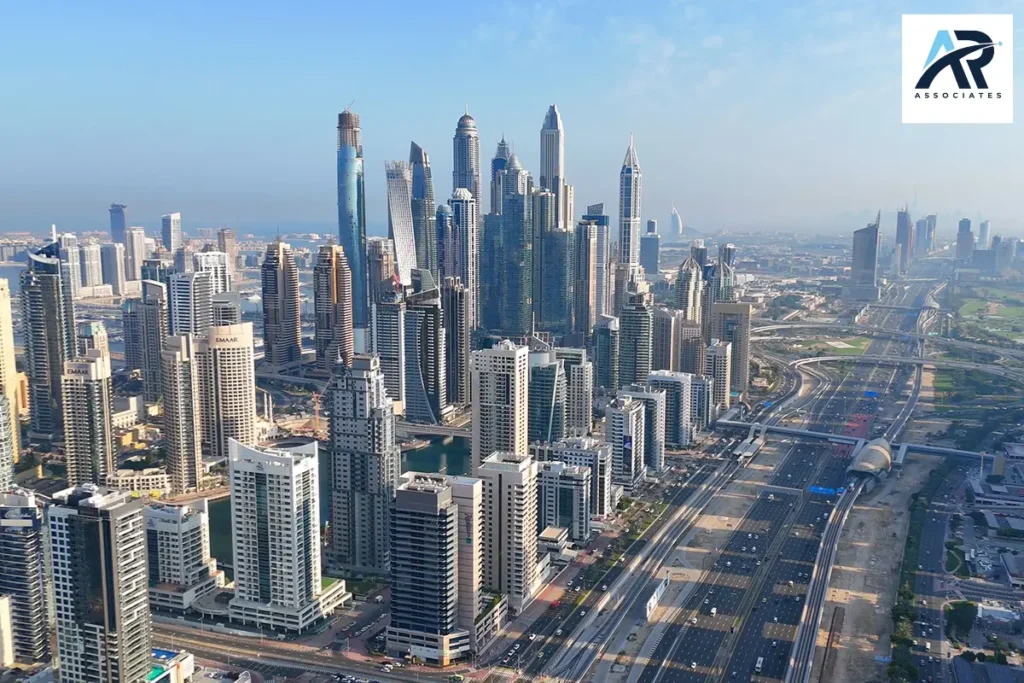
Dubai’s property sector continues to surge, recording over $4 billion (AED 14.64 billion) in transactions last week, according to data from the Dubai Land Department. The activity included more than 4,300 sales transactions between October 13 and 17, showing strong investor confidence in the Dubai real estate market. Big Numbers, Bigger Deals Out of the total, sales transactions alone made up around AED 10.82 billion ($2.95 billion). Mortgage deals reached AED 3.05 billion ($831 million), while property gifts were valued at AED 770 million ($210 million). The week also featured some record-breaking luxury sales. These numbers highlight Dubai’s growing status as a global hub for high-end real estate. Investors from across the world continue to target the city’s premium residential developments for both luxury living and strong returns. Consistent Demand Across Sectors The consistent demand for luxury properties reflects a wider confidence in Dubai’s economy. High-net-worth buyers see the city as a secure place to invest, thanks to stable regulations, attractive yields, and continued infrastructure development. Mid-range and affordable housing segments are also seeing steady activity. The city’s growing population and strong job market have increased local demand for new homes. Developers are responding with mixed-use communities that combine residential, retail, and leisure options. The Role of Global Investors Foreign investors remain a major driver of growth in the Dubai real estate market. Favorable ownership laws, simple buying procedures, and strong rental potential make Dubai an attractive destination for international buyers. The government’s push toward digital property services has also simplified processes for overseas investors. Experts note that the city’s appeal extends beyond lifestyle. Investors view Dubai as a strategic location connecting Asia, Europe, and Africa, with a stable political environment and strong economic policies. Technology and Transparency Digital transformation has played a key role in this success. The Dubai Land Department continues to expand online platforms that make property transactions faster, safer, and more transparent. Buyers can now view verified listings, access property data, and complete parts of the process remotely. Such initiatives build trust and support Dubai’s vision to become a global benchmark in real estate efficiency. Luxury Continues to Lead Luxury homes, particularly in areas like Palm Jumeirah, Jumeirah Bay, and Downtown Dubai, continue to outperform other segments. Ultra-luxury properties offer more than status—they provide privacy, waterfront access, and architectural design that rivals the best in the world. The record sale at Bulgari Lighthouse is a strong reminder that Dubai’s high-end sector remains unmatched in the region. Experts expect more multi-million dollar deals as developers release limited-edition residences with global appeal. Outlook With ongoing projects and a steady flow of foreign investment, Dubai’s property sector shows no signs of slowing down. The combination of investor-friendly laws, robust infrastructure, and digital innovation continues to attract new buyers and developers. As market confidence grows, Dubai’s position as a leading real estate destination becomes stronger each week. The data points to sustained activity and long-term stability—making now a strong time to invest or expand holdings in the city. Interested in investing or expanding your portfolio in Dubai?Get expert guidance from AR Associates—your trusted advisors for smooth and strategic property and business setup in the UAE.